Run on Your New Legs Manga Reading Order (All 5 Vols)
Looking for the reading order for the Run on Your New Legs manga? Good news — this one is refreshingly straightforward. The series is a completed manga spanning exactly five volumes, with no spin-offs, prequels, side stories, or alternate timelines to worry about. You pick up Volume 1, read through Volume 5, and you’ve experienced the entire story.
Run on Your New Legs Reading Order: All 5 Volumes
- Run on Your New Legs, Vol. 1
- Run on Your New Legs, Vol. 2
- Run on Your New Legs, Vol. 3
- Run on Your New Legs, Vol. 4
- Run on Your New Legs, Vol. 5 — the final volume, which brings the story to its close:
Run on Your New Legs, Vol. 5 (final volume)
That’s it. No flowcharts, no debates about recommended versus chronological order, no companion guides needed. The English edition is published by Yen Press, and all five volumes are available right now. If you’re ready to start, Volume 1 is the only entry point you need.
The manga follows a young man named Kikuzato Shouta as he navigates the world of parasport sprinting — specifically blade running — after losing his leg. It’s a deeply personal sports story wrapped in a tight, self-contained package. The series was serialized in the Japanese weekly manga magazine Weekly Big Comic Spirits (a Shogakukan magazine aimed at older readers) from October 2019 through November 2020, with the five collected volumes released between March and December 2020. The creator is credited as みどりわたる (Midori Wataru).
Why Reading Order Is Simple for This Series
Some manga require a spreadsheet to figure out where to start. Run on Your New Legs is the opposite. There’s a single, continuous narrative that flows from the first chapter of Volume 1 to the final page of Volume 5. No branching plotlines, no companion manga set in the same universe, no prequel chapters released years later.
There are a few specific reasons this series stays so clean:
- No anime adaptation exists. That means there’s no “should I watch the anime first?” question. The manga is the only way to experience the story right now, so there’s no confusion about whether the anime covers certain storylines differently or skips content.
- No side stories or bonus volumes. Some sports manga produce additional volumes — spinoff stories, reference books with character stats, or anthology collections. Run on Your New Legs has none of that. Five volumes, one story, beginning to end.
- Each volume builds directly on the last. Kikuzato’s journey — both emotional and athletic — progresses in a linear way. His relationships with coaches, rivals, and his own sense of identity develop chapter by chapter. Skipping even one volume would mean missing key turning points in his growth as a competitor and as a person coming to terms with his new reality.
If you’ve ever been intimidated by a manga with dozens of volumes and complicated reading guides, this series is a breath of fresh air. You can realistically read the entire thing in a weekend — maybe even in a single long sitting if you’re the type who gets absorbed.
Do You Need to Know Anything About Parasports Before Reading?
Not at all. One of the things this manga does well is bring you into the world of blade running and parasport athletics alongside the protagonist. He’s learning everything from scratch — what running blades feel like, how they work, the nuances of competitive para-sprinting — and so are you.
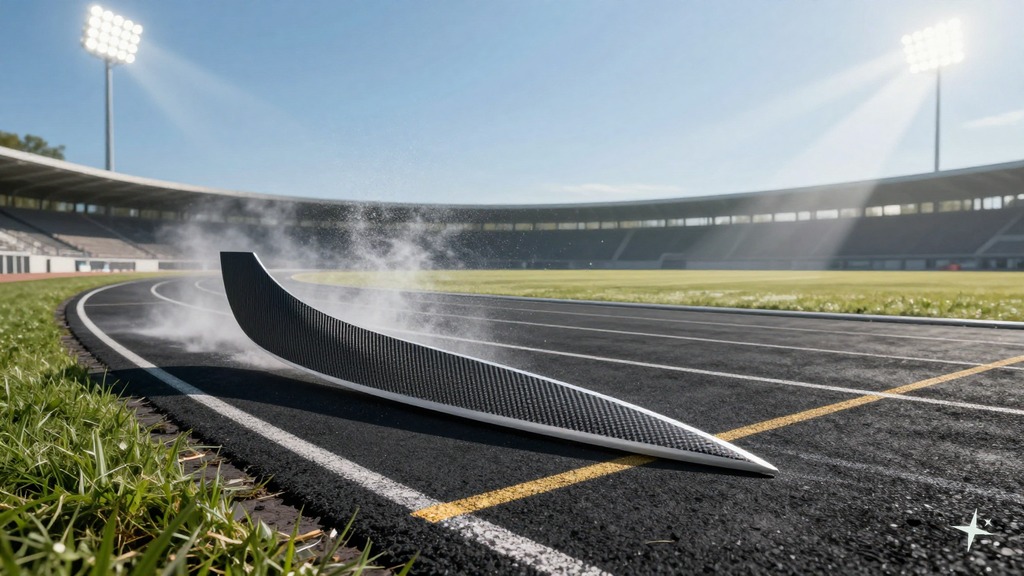
The story introduces the sport’s equipment, rules, and competitive culture naturally through the narrative rather than dumping information on you all at once. By the time you’ve read a few chapters, you’ll have a solid grasp of running blades (the carbon-fiber artificial limbs used for competitive sprinting), how they differ from everyday artificial limbs, and what it takes to compete.
The creator clearly did their research, and it shows. But the information never overwhelms the human story at the center. You’re always reading about a character first and an athlete second, which makes the parasport elements feel earned rather than gimmicky.
For readers who have zero familiarity with para-athletics, that’s actually an ideal starting point. The manga is designed so that you discover the sport alongside Kikuzato. By the end of five volumes, you’ll have a genuine appreciation for what blade runners go through — without needing to have researched anything beforehand.
Which Edition Should You Buy?
There aren’t a ton of options to compare here, which keeps things simple.
English Edition (Yen Press)
The English translation is published by Yen Press. All five volumes are available in both physical and digital formats through major retailers. This is the standard single-volume format — each English volume corresponds to one Japanese volume, so there’s no content difference or reorganization to worry about.
There are no collected multi-volume editions, box sets, or special collector’s editions for the English release as of now. The standard single volumes are your only option, and they’re perfectly good ones.
Japanese Edition (Shogakukan)
The original Japanese edition was published by Shogakukan under the Big Comics label. If you’re learning Japanese and want to read the manga in its original language, the five-volume set is complete and available. The Japanese title is 新しい足で駆け抜けろ。
Digital vs. Physical
Both formats are widely available for the English edition. Here’s a quick comparison:
| Factor | Physical | Digital |
|---|---|---|
| Availability | All 5 volumes in print | All 5 volumes on major platforms |
| Shelf presence | Looks great on a manga shelf | No shelf space needed |
| Portability | 5 slim volumes — easy to carry | Read on any device |
| Price | Standard manga retail pricing at US list price | Often lower than physical |
| Best for | Collectors, physical readers | Convenience, instant access |
For a five-volume series, physical is very manageable. You’re not committing to a massive shelf investment. But if you prefer reading on a tablet or phone, the digital editions are just as complete.
A Note on Format
Because this is a shorter series with no special editions, there’s really no wrong choice here. Pick whichever format you prefer and you’ll get the full story. The only thing to watch out for is making sure you’re buying all five volumes — since the series is complete, you can grab them all at once and read straight through without waiting for future releases.
Tips for First-Time Readers
Whether this is your first sports manga or your fiftieth, here are some things worth knowing before you start:
Give the early chapters room to breathe. The manga doesn’t rush into high-speed competitive action right away. The opening chapters focus on Kikuzato’s emotional state — dealing with the loss of his leg, confronting what his future looks like, and the slow process of even considering athletics as a possibility. This groundwork is what makes the later competitive moments hit so hard. If you’re expecting races and training sequences from page one, be patient. The payoff is worth it.
The handling of disability is thoughtful and grounded. This isn’t a story that uses disability as a simple plot device or a shortcut to make you feel inspired. The manga engages with the real complexity of losing a limb — the frustration, the grief, the practical challenges, and the way other people’s reactions can be just as difficult as the physical reality. It treats its subject matter with genuine respect, which is one of the reasons the series stands out.
It’s a fantastic entry point for sports manga newcomers. If you’ve never read a sports manga before and the idea of jumping into a long-running series feels overwhelming, Run on Your New Legs is an ideal starting place. At just five volumes, it gives you a complete, satisfying sports narrative without a massive time or money commitment. You’ll get a feel for how sports manga handles training, rivalries, competition sequences, and personal growth — all the hallmarks of the genre — in a compact package.
Read it in one or two sittings if you can. The emotional flow of the story benefits from momentum. Because the series is so short, each volume transitions smoothly into the next, and putting long breaks between volumes can dilute the building tension. A weekend read is perfect — but any pace works. Even if you can only read a volume at a time, the story holds up.
Don’t expect a sequel. The story is complete and self-contained. There are no announcements of a continuation, sequel series, or adaptation. What you get in these five volumes is the full story the creator wanted to tell, and it reaches a satisfying conclusion. That might actually be refreshing if you’re used to manga that stretch on indefinitely.
Frequently Asked Questions
Is Run on Your New Legs finished?
Yes. The series is completed at five volumes. The Japanese edition wrapped up in December 2020, and all five English volumes from Yen Press are available now. You can read the entire story without waiting for future releases.
Is there an anime adaptation?
No. As of now, no anime adaptation has been announced or produced for Run on Your New Legs. The manga is the only way to experience the story.
Who created Run on Your New Legs?
The manga is by the creator credited as みどりわたる (Midori Wataru). It was published under Shogakukan’s Big Comics (ビッグコミックス) imprint.
Can I read it digitally?
Yes. Both digital and physical editions are available for the English release through major retailers. The digital versions contain the same content as the print editions.
What genre is it?
Run on Your New Legs is a sports manga focused on parasport sprinting (blade running). It also has strong elements of drama and personal growth. In Japan, it was published under Shogakukan’s Big Comics (ビッグコミックス) imprint, which is associated with seinen titles for older teens and adults, but the themes are universal — the story resonates regardless of your age or gender.
Do I need to read any other manga first?
Nope. This is a completely standalone series with no connections to other manga, no shared universe, and no prerequisite reading. Volume 1 is your starting line.
Is it appropriate for younger readers?
The manga deals with themes of disability, physical trauma, and emotional struggle. There’s nothing graphic or inappropriate in the content, but the emotional weight of the story might be better suited for teens and up rather than very young readers. It’s a mature story in the “thoughtful and emotionally complex” sense, not in the “graphic content” sense.
How long does it take to read?
With just five standard-length manga volumes, most readers can finish the entire series in a few hours. It’s one of the shortest complete sports manga out there, which makes it easy to fit into a busy schedule.