Is Chihayafuru Manga Finished? Status & Reading Info
If you’ve been eyeing Chihayafuru and wondering whether the manga is finished and safe to start without getting stuck mid-story — good news. The series is done, the ending is real, and every single volume is available in English right now. Here’s the full breakdown.
Yes, the Chihayafuru Manga Is Finished — Here’s the Full Status
Chihayafuru is complete. The manga ran for 247 chapters across 50 volumes, and the story is fully wrapped up.
To clarify those terms if you’re newer to manga: chapters are individual installments (like episodes of a TV show), and volumes are collected books that bundle several chapters together. So 247 chapters packaged into 50 volumes is the entire series.
The series concluded in Japan in December 2022, capping off a serialization run that started all the way back in December 2007. That’s roughly 15 years of competitive karuta drama — and it all reached a proper, planned ending.
For English readers, the timeline took a bit longer. Kodansha Comics published all 50 volumes in English, with the final volume (Vol. 50) released on June 3, 2025. That means there’s zero waiting involved. You can pick up Volume 1 today and read straight through to the end without hitting any gaps, hiatuses, or unresolved cliffhangers.
This is one of those rare long-running manga where you get the complete experience from day one if you’re starting now. No chasing release dates, no wondering if it got cancelled. The whole journey is right there.
Publication History — From 2007 to 2022
Chihayafuru was created by Yuki Suetsugu (末次由紀) and serialized in BE・LOVE magazine, a josei publication from Kodansha. Josei is a manga category aimed at adult women, though in practice, Chihayafuru has a broad readership across all demographics. In manga publishing, most series debut chapter-by-chapter in a magazine before those chapters are collected into the book-format volumes you buy off the shelf. That’s exactly how Chihayafuru came together over its 15-year run.
The first volume hit shelves on May 13, 2008, and the series ran until the final chapter appeared in August 2022, with the collected final volume (Vol. 50) published in December 2022 in Japan.
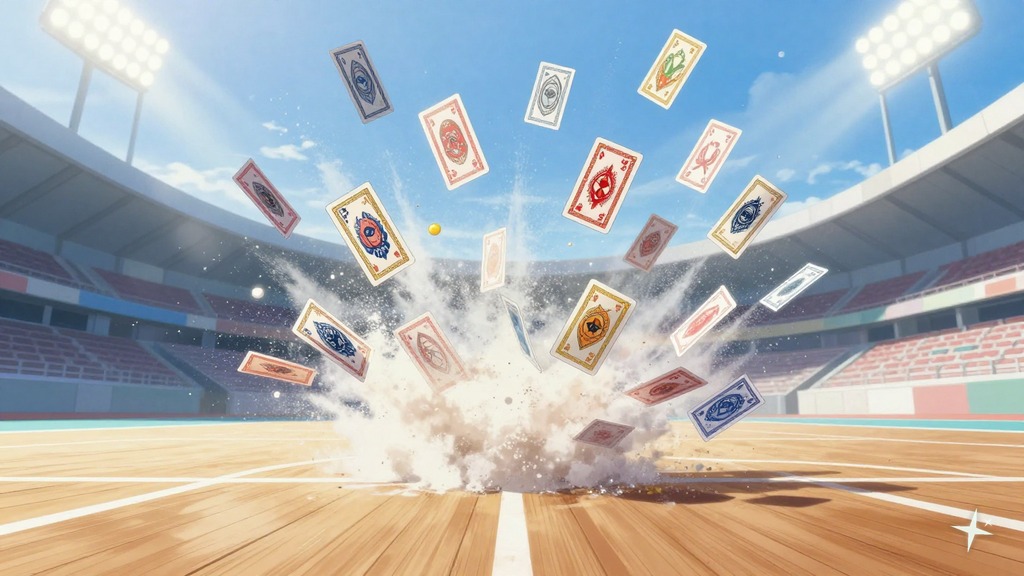
Across those years, Suetsugu told a sweeping story about Chihaya Ayase and her pursuit of becoming the best competitive karuta player in Japan. If you’re not familiar with karuta, it’s a traditional Japanese card game — but “card game” really undersells it. Competitive karuta is fast, physically demanding, and intensely strategic. Players need to memorize 100 classical poems (from the Hyakunin Isshu, a famous anthology that’s been part of Japanese culture for centuries) and snatch the corresponding cards off the mat in fractions of a second when a reader begins reciting the opening lines. It requires sharp reflexes, physical stamina, mental focus, and strategic card placement on the playing field. The manga leans into all of these elements, and that combination of mind and body is a huge part of what makes Chihayafuru so compelling. If you’ve ever enjoyed a sports manga — meaning a manga built around athletic or competitive pursuits, with training, rivalries, and tournament stakes — this fits squarely in that tradition, even though the sport itself is unlike anything most Western readers have encountered.
The story follows Chihaya from her childhood introduction to the game through high school team competitions and into national-level individual matches. Along the way, it builds out a rich cast of teammates, rivals, mentors, and friends — each with their own relationship to karuta and their own reasons for playing.
The English edition from Kodansha Comics followed the Japanese release over the course of several years. The final English volume landed on June 3, 2025, completing the full 50-volume run for English-speaking readers.
Here’s a quick snapshot of the series at a glance:
| Detail | Info |
|---|---|
| Author | Yuki Suetsugu (末次由紀) |
| Magazine | BE・LOVE |
| Total Volumes | 50 |
| Total Chapters | 247 |
| First Volume (JP) | May 13, 2008 |
| Final Volume (JP) | December 2022 |
| English Publisher | Kodansha Comics |
| Final Volume (EN) | June 3, 2025 |
| Status | Complete |
Does the Story Reach a Real Conclusion?
This is the question that matters most, especially if you’ve ever been burned by a manga that got cancelled by its publisher partway through and had to rush its story to a premature close. So let’s be clear: Chihayafuru reaches a definitive ending.
Without spoiling anything specific, the manga’s final stretch covers the climactic karuta matches that the entire series had been building toward. The major competitive storylines — the ones that drive the plot from the very beginning — reach their conclusions. The central character relationships get resolved. You’re not left hanging.
This wasn’t a case of a series getting cut short and having to scramble for a quick wrap-up. Suetsugu completed the story on her own terms across 50 volumes. That kind of space gives the ending room to breathe. The final chapters don’t feel like a sprint to the finish line — they feel like the destination the Chihayafuru manga was always heading toward.
Reader reception backs this up. Chihayafuru’s conclusion is widely regarded as a satisfying end to one of the most beloved sports manga of its era. Fans who followed the series for years generally came away feeling that the ending honored the characters and the themes the story had explored. Not every reader agrees on every detail (when do they ever?), but the consensus is that this is a story that stuck the landing.
If you’re the kind of reader who needs to know an ending exists and that it’s worthwhile before committing to a 50-volume series — you’re in good shape here.
What to Read Next After Chihayafuru
Finished all 50 volumes and feeling that void where your current reading obsession used to be? Here are some directions to explore.
If what grabbed you was the competitive strategy and mental intensity, look into manga centered on traditional games or mind sports. Hikaru no Go (which follows a boy who discovers the world of competitive Go) captures a remarkably similar feeling — an obscure traditional game brought to life through fierce rivalries and gradual mastery. March Comes in Like a Lion (3-gatsu no Lion) does the same for shogi (Japanese chess), with an added layer of introspective character drama that Chihayafuru fans tend to appreciate.
If the team dynamics were the highlight for you — the camaraderie, the training segments, the feeling of building something together — then team-focused sports manga will feel like home. Haikyu!! (volleyball) is the most direct recommendation for its emphasis on ensemble cast development and the emotional highs of competition. Slam Dunk (basketball) is an older classic that shares Chihayafuru’s ability to make you deeply invested in every member of the team.
And if you loved Chihayafuru specifically for its deep character development over a long run — the way it followed characters from childhood into adulthood and let them grow slowly and realistically — look for other long-form josei or seinen manga. Seinen is the counterpart to josei, aimed at adult men but similarly focused on layered storytelling over spectacle. Descending Stories: Showa Genroku Rakugo Shinju is a standout recommendation here: it’s a josei series about the world of traditional rakugo performance, with the same patient pacing and emotional richness that defines Chihayafuru.
The beauty of the Chihayafuru manga is that it appeals to sports manga fans, character drama fans, and romance fans all at once. Whatever thread pulled you in, there’s more manga out there that tugs on the same one.
Where to Buy Chihayafuru in English
All 50 volumes of Chihayafuru are available in English from Kodansha Comics. The series is available digitally, which makes it easy to start reading right away. Physical volumes are also available through major retailers, though with a 50-volume series you may find that some earlier volumes go in and out of stock — buying digitally avoids that issue entirely.
You can find the digital edition on major platforms including Kindle. There’s no special reading order to worry about — Chihayafuru is a single continuous series that runs from Volume 1 straight through to Volume 50. Just start at the beginning.
If you’re looking to grab the final volume to complete your collection (or to see how it all ends), Volume 50 was released on June 3, 2025.
Chihayafuru
Since this is a 50-volume series, the total investment adds up. If you’re not sure whether the series is for you, starting with just the first few volumes digitally is a low-risk way to test the waters. The opening chapters do a great job of establishing the characters and the world of competitive karuta, so you’ll know pretty quickly whether it hooks you.
Frequently Asked Questions
How many volumes of Chihayafuru are there?
50 volumes in both the Japanese and English editions. The series spans 247 chapters total.
Is Chihayafuru available in English?
Yes — all 50 volumes are published in English by Kodansha Comics. The final volume was released on June 3, 2025, so the complete Chihayafuru manga is now available for English-speaking readers.
Is there a Chihayafuru anime?
Yes. The manga was adapted into three anime TV seasons (covering roughly the first half of the manga’s story) as well as live-action films. The anime is a popular way to discover the series, and many fans start there before moving to the manga. If you watch the anime and want to see how the full story concludes — including the final tournaments and character resolutions — you’ll need the manga to get there, since the anime doesn’t cover the complete run.
Is competitive karuta a real sport?
Absolutely. Competitive karuta is an officially organized sport in Japan with national tournaments, ranked players, and a governing body. The game is based on the Hyakunin Isshu, a classical anthology of 100 Japanese poems that dates back to the 13th century. Players memorize all 100 poems and compete to grab the corresponding cards faster than their opponent when a reader recites the opening lines. It requires memorization, reflexes, physical stamina, and strategic card placement — which is exactly why it makes such compelling manga material. Chihayafuru is widely credited with bringing mainstream attention to the sport, both in Japan and internationally.